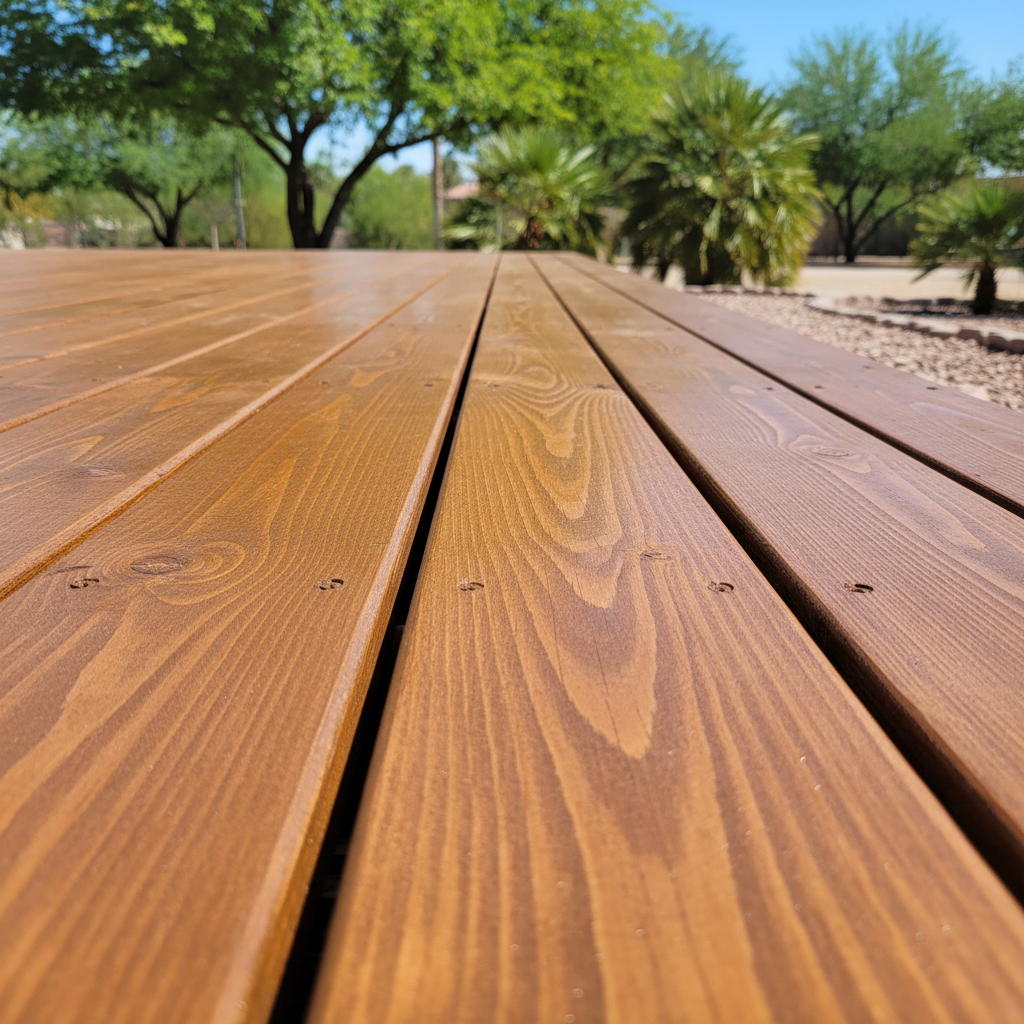
That brutal Valley sun does not play around with outdoor wood. If your backyard deck is sitting under direct southern exposure in Arcadia or out in the West Valley, you have probably watched a rich cedar or redwood finish turn bone-dry and gray in a single season. The combination of intense UV radiation and single-digit humidity levels sucks the life right out of timber. Reviving it takes more than just slapping on a coat of cheap product from the big box store.
Before You Touch a Brush: The Reality of Desert Prep
Preparation is eighty percent of the job, and it is where most do-it-yourself attempts fall apart. You cannot just roll stain over a dusty, baked surface. You have to clear off the years of oxidized wood fibers, dirt, and failing old sealers. Done Right Decks of Phoenix sees homeowners try to power-wash their way out of a mess, only to gouge the soft grain of the wood because the pressure was cranked up way too high.
- Sweep away all debris and check every single protruding screw or loose fastener.
- Use a specialized deck cleaner designed to lift organic grime without harming the fibers.
- Sand down any splintered high traffic zones or rough patches so the new finish can actually sink into the grain.
- Let the deck dry out thoroughly for a couple of days before opening a can of stain.
Choosing Your Battle: DIY vs. Calling a Pro
Can you tackle this yourself? Sure, if you have a free weekend, a lot of patience, and a small-to-medium ground-level platform. Rolling on a semi-transparent penetrating oil stain is a manageable Saturday project for a handy homeowner who does not mind breaking a sweat in the garage or yard.
Where you draw the line depends on scale and safety. If your setup features a complicated multi-tier design, high-elevation railings that require scaffolding, or neglected hardwood that has been baking in the desert for five years straight, you will save yourself a massive headache by hiring professionals. Done Right Decks of Phoenix brings commercial sanders, professional spray rigs, and commercial-grade UV blockers that outlast off-the-shelf formulas by years.
Applying the Finish Without Cooking It
Timing matters more here than almost anywhere else in the country. Trying to stain a deck in July when board surface temperatures easily clear 140 degrees is a total disaster. The product will dry instantly on top of the wood before it can penetrate, leaving you with a sticky, blotchy mess that peels up under your feet. Aim for the cooler shoulder months—late fall or early winter mornings give you the ideal window. Work in the shade whenever possible, following the direction of the wood grain, and wipe up any pooling excess before it bakes into a shiny, tacky film.
Keep foot traffic off the newly treated surface for at least 48 hours while the oils settle into the grain. Give your backyard a quick rinse down the road when dust builds up, and plan on maintenance coats every couple of years to keep that desert heat from winning the war.